Showing posts with label environmental issues. Show all posts

Sunday, 15 December 2024

Disaster Management

 Discuss the Disaster Management capacity of Nepal with legal provisions

--------------

Model Ans:

Nepal faces significant disaster risks due to its geophysical and climatic conditions, including earthquakes, landslides, floods, and glacial lake outburst floods (GLOFs). The disaster management capacity of Nepal involves a combination of institutional frameworks, legal provisions, and community-driven initiatives.


Disaster Management Capacity

  1. Institutional Framework:

    • National Disaster Risk Reduction and Management Authority (NDRRMA): Established as per the Disaster Risk Reduction and Management (DRRM) Act, 2017, it oversees disaster risk reduction, response, and preparedness.
    • Local Level Governance: Municipalities and rural municipalities play an active role in preparing local disaster management plans.
    • Humanitarian Assistance: Nepal collaborates with international organizations like the UNDP, World Bank, and NGOs to enhance disaster preparedness.
  2. Key Strengths:

    • Community-based disaster risk reduction programs are implemented to empower local communities.
    • Integration of GIS and remote sensing for hazard mapping and early warning systems, particularly for floods and landslides.
  3. Challenges:

    • Limited financial resources and infrastructure for disaster response.
    • Inadequate coordination between federal, provincial, and local governments.
    • Insufficient capacity for urban disaster management amidst growing urbanization.

Legal Provisions for Disaster Management

  1. Constitution of Nepal (2015):

    • Recognizes disaster management as a shared responsibility among federal, provincial, and local governments.
    • Ensures the right to live in a safe and clean environment.
  2. Disaster Risk Reduction and Management Act, 2017:

    • Replaces the Natural Calamity Relief Act (1982) to adopt a proactive approach focusing on risk reduction rather than relief alone.
    • Establishes the NDRRMA and mandates preparation of disaster management plans at all government levels.
  3. Environment Protection Act, 2019:

    • Includes provisions to mitigate environmental hazards contributing to disasters.
  4. Local Government Operation Act, 2017:

    • Empowers local governments to formulate and implement disaster risk reduction plans.
  5. Building Codes and Guidelines:

    • Nepal National Building Code (NBC) includes seismic safety standards for construction to mitigate earthquake risks.

Key Examples of Disaster Management Efforts

  1. Earthquake Preparedness:

    • After the 2015 Gorkha earthquake, the government implemented the Post-Disaster Recovery Framework, focusing on reconstruction and resilience.
    • Initiatives like retrofitting public buildings and schools are ongoing to minimize future risks.
  2. Flood and Landslide Management:

    • Early warning systems for floods, especially in the Koshi and Gandaki river basins, have been enhanced with international support.
    • Afforestation and slope stabilization programs are underway in landslide-prone areas.
  3. Pandemic Response:

    • The COVID-19 pandemic highlighted the importance of health disaster preparedness. Efforts are ongoing to integrate health risks into disaster management plans.

Improving Disaster Management in Nepal

To strengthen disaster management capacity, Nepal needs:

  • Enhanced investment in infrastructure, training, and technologies.
  • Better coordination among government tiers.
  • Awareness campaigns to prepare communities.
  • Stronger enforcement of building codes to reduce urban vulnerabilities.

By integrating these measures with existing legal frameworks, Nepal can build resilience against future disasters.


·        Legislation and Policies: The Disaster Risk Reduction and Management (DRRM) Act of 2017 provides the legal framework for disaster management activities. The National DRRM Policy (2075) and the National DRRM Strategic Action Plan (2018-2030) outline comprehensive strategies for risk reduction, preparedness, response, and recovery.

    https://bipad.gov.np/np/rules-and-regulations 

    http://drrportal.gov.np/document/category/ndrrpsap


Climate Change

 What is climate change?  How can Nepal combat climate change? Discuss the legal provisions in climate combats of Nepal.

--------------------------------------------------------------------------------------------------------------------------------

# https://www.un.org/en/climatechange/what-is-climate-change


# extracted: Country Climate and Development Report for Nepal, 2022

(a) taking an integrated approach to water, agriculture, and forests; 

(b) harnessing the hydropower opportunity and energy transition; 

(c) managing sustainable urbanization; and 

(d) strengthening low-carbon resilient connectivity


Nepal needs to prioritize three key enablers: 

scale up finance for resilience and low-carbon development; 

strengthen household and community resilience; and 

strengthen governance for climate change and DRM


  •  integrated approach to water, agriculture, and forests: 

  • Agriculture and land use together accounted for 62 percent of GHG emissions in 2019. 

  • Forest cover has expanded in recent years. This is largely due to Nepal’s community-based forest management experience over several decades which now reaches over 18,000 communities managing 21 percent of Nepal’s forests. 

  • Nepal’s forests and soils serve as an important carbon sink, counter-balancing emissions from agriculture, land use change, biomass burning, and other sources.

  • To optimize economic benefits, build resilience, and adapt to a changing climate, Nepal’s water, agricultural, forest, and energy sectors must approach resilience and sustainability in an integrated way.


  • Enhancing water resource management. 

  • Embracing climate-smart agriculture. 

  • Transitioning to sustainable forest management: large-scale success with community-based forestry and the new Forest Regulation 2022 form a solid basis to transition to sustainable forest management (SFM)


  • Harnessing the hydropower opportunity and energy transition 

  • Nepal has among the world’s largest hydropower resources with an estimated economically viable potential of 42 GW.

  • Nepal’s hydropower development opportunity is fundamentally linked to exporting surplus during the monsoon season; realizing this will require securing offtake arrangements, upgrading storage, and ensuring investments are robust to climate risks.


  • Scaled-up hydropower also offers the medium-term potential to grow climate-smart energy solutions such as electric mobility and green hydrogen.

  • To complement the focus on hydropower, economically viable applications could be developed to support the electrification of the economy to provide better and more sustainable energy services across Nepal.


  • Managing sustainable urbanization

  • Nepal is the fastest urbanizing country in South Asia, with urban growth rates up to 5 percent per year.

  • As Nepal’s urban population grows rapidly, solid waste management (SWM), resilient buildings, and clean water supply present challenges and opportunities for climate action with development gains


  • Strategic urban planning can deliver climate and development benefits including advancing green urban transport in major cities and stimulating more efficient low-carbon trucking.


  • Strengthening low-carbon resilient connectivity 

  • Nepal’s transport sector is a key driver of economic growth but is vulnerable to climate-related Hazards.

  • To integrate climate resilience in transport, managing the trade-off between cost and risk management remains a challenge.

  • To integrate climate resilience in transport, managing the trade-off between cost and risk management remains a challenge.

  • Nepal’s ambitions to digitalize its economy can help fill connectivity gaps and support low-carbon and climate-resilient development.


  • Scale up financing for resilience and low-carbon development 

  • Nepal’s climate adaptation needs are substantial, but investment requirements need to be further defined and prioritized. 

  • Nepal already faces the challenge of limited fiscal space, which is the result of consecutive wide fiscal deficits since FY18.

  • Reprioritizing public expenditures can deliver high development and climate synergies. 

  • Private finance and FDI are currently limited, and private investment flows are unlikely to materialize without significant improvements to the regulatory framework.

  • In the near term, Nepal should focus on elaborating, costing, and implementing a more detailed and clearly prioritized pipeline of adaptation and mitigation investments.


  • Attracting investments in adaptation and resilience is particularly challenging, as such investments do not usually offer a revenue stream and are not immediately attractive to the private sector.

  • The government’s call for concessional climate finance is well justified and efforts to mobilize and provide such finance should be strongly supported.

  • Development finance can help 


  • Strengthen household and community resilience

  • Social protection can help build the resilience of poor and vulnerable households to prepare for, cope with, and adapt to climate shocks.

  • Communities are usually the first responder to disasters and play a key role in local climate and disaster resilience action

  • Nepal currently has limited ex ante financing instruments in place to respond to disasters.

  • Human resources with relevant skills can be key factors in engaging communities in climate solutions.


  • Strengthen governance for climate change and disaster risk management

  • It is imperative to strengthen institutions in Nepal, particularly local and provincial governments that are on the front lines of integrating climate and DRM.

  • Addressing climate change and disaster risk demands a shift from the BAU approach in terms of knowledge and technical capacity to understand, assess, and plan for the changing climate and adapt to and mitigate risks effectively.

  • Federalization of climate and DRM governance is imperative to effectively respond to climate and disaster risk across Nepal.


# Legal Developments

National Climate Change Policy, 2019

• Environment Protection Act, 2019, and Regulation 2020

• Nationally Determined Contribution (NDC), 2020 and NDC

Implementation Plan, 2023

• National Adaptation Plan (NAP), 2021

• Nepal’s Long-Term Strategy for Net Zero Emissions (LTS),

2021

• Sustainable Development Goals (SDGs) 2015-2030

• Green, Resilient and Inclusive Development (GRID)

Approach, - Kathmandu Declaration 2021

• Industrial Enterprise Act 2020

• Disaster Risk Reduction and Management Act 2017

• Local Government Operation Act 2017

• Motor Vehicle and Transport Management Act 1993 and

Regulation 1997

• Forest Act 2019 and Rules 2022

• Water Resources Act 1992

• Electricity Act 1992


Sunday, 30 June 2024

Energy Transition Index nepal

Nepal ranks 100th in Energy Transition Index 2024.

Tuesday, 25 June 2024

Desertification ~ nepal

 photo via: Nagarik Network
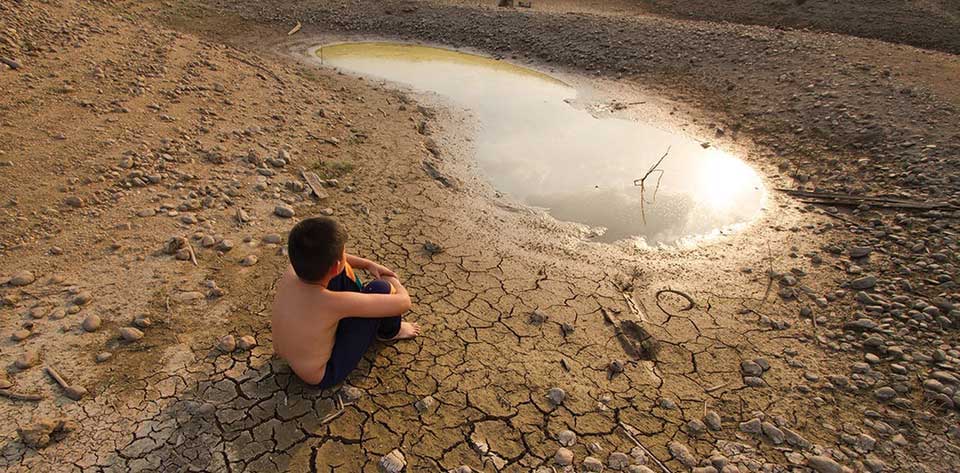
Once the soil loses its organic content to sustain the plant life or biomass production varying itself barren, as the result of soil erosion, deforestation, unmanaged urbanization and unsustainable agriculture, the soil is desertified. The country Nepal is vulnerable with the impacts of the global climate change directly impacting the nation's soil health. Country's bulldozer development in most corner's of the hilly districts while haphazard uses of the chemicals fertilizers, exploitations of riverbeds of Chure range for pebbles and yearly natural disasters, rainfall seriously deteriorates Nepal's soil resources.

Wednesday, 24 April 2024

Water and water supply: status and importance

1.45 The contribution of water supply, sewerage, waste management and

recycling activities to the GDP has been decreasing for the past few years.

In the fiscal year 2021/22, the contribution of this sector to the GDP was

0.59 percent, and it is estimated that this contribution will be 0.46 percent

in the current fiscal year. The growth rate of total value added in this sector

is estimated to be 2.2 percent in FY 2022/23.


6.4 Human Development Index of Nepal as per Human Development Report, 2021 has

reached to 0.602. According to the report, Nepal ranks 143rd in the world ranking

of human development. Due to the increasing investments in social sectors such as

education, health, drinking water etc., the index of the social sector is gradually

improving at an annual average of 1.34 percent from 1990 to 2021.


About 5.3 percent of Nepal's water area is covered by rivers, streams, lakes,

ponds, irrigated paddy fields, canals, ponds, reservoirs, etc. About

400,000 families are earning their living by catching fish from

natural reservoirs, and about 21,000 metric tons of fish are produced

from these reservoirs, contributing to Rs.13 billion annually.


7.62 Until the mid-March of FY 2022/23, under the President Chure-Terai

Conservation Program, 35,000 plants have been produced. In the main

river system, 13.7 kilometers of river and streambank

stabilization/management work has been completed. Additionally, during

this period, land-based water recharge has been carried out at 4 locations,

and flood/dike/embankment control has been implemented at 48 locations.


10.23 Feasibility study related to operation of watercraft in inland waterways has

been completed on the Karnali river (115 km), Kaligandaki (95 km),

Koshi river (75 km), Narayani river (85 km), Trishuli river (22 km),

Sunkoshi river (68 km), Rapti river (102 km), Babai river (52 km),

Dudhkoshi river (20 km) and Marshyandi river (20 km) as of mid-March

of 2023. Also, a Detailed Project Report (DPR) has been prepared for the

construction of Passenger River Terminal on the Koshi River.


11.58 The population having access to basic drinking water has reached 94.93

percent by mid-March of 2022 , while the population having access to high

and medium quality drinking water services is 25.81 percent.


11.59 An additional 37,687 people have benefited from high and medium quality

drinking water facilities by mid-March of 2023 with the completion of 2 projects-

Deurali Hoopscot Water Supply Project of Nawalpur and Subhaghat Water

Supply project of Surkhet under Urban Water Supply project.


https://www.mof.gov.np/uploads/document/file/1710323031_Economic%20Survey%20Engslish%202022-23%20Eng%20Final%20for%20WEB.pdf

Population management, urbanization and settlement

Population management, urbanization and settlement

29. According to the National Census, 2021, there is a golden opportunity to achieve demographic dividend as the share of working age group population (15-59 years of labor force) is 62.0 percent in the demographic structure. However, as the number of children born is declining and the aging population is increasing, the opportunity for such benefit is estimated to last for the next four decades.

35. As of mid-March of 2023, electricity has reached 95.0 percent of the population. The total installed electricity capacity has increased by 21.7 percent compared to mid-July of 2022, reaching 2,666 megawatts.

The population engaged in agriculture is decreasing. According to the labor force survey in 2018, population engaged in agriculture in sector was 60 percent, whereas this ratio became 50.4 percent as shown by the same survey in 2021.

9.1 With the development of basic services and the expansion of physical infrastructure, the urban population is increasing. According to the National Census, 2021, 66.2 percent of the population lives in municipalities. Public policy should be focused on reducing the economic, human and infrastructure losses of disasters in order to reduce disaster risk by making cities and human settlements inclusive, safe, resilient and sustainable. In addition, there is a need to launch an integrated settlement development program to make public service facilities efficient, fast, economical and effective.


Environment Management

* Environment Management:


* Biological Diversity:

The number of tigers in Nepal has increased to 355 in 2022. In 2018, the

number of tigers was 235. In 2021, the number of endangered Krishnasara

increased by 39 from 336 in 2022 to 375 in 2022.

7.61 So far, 293 species of indigenous flora have been documented in Nepal.

Also, 5,309 flowering species and 6,083 non-flowering species have been

documented.

7.62 Until the mid-March of FY 2022/23, under the President Chure-Terai

Conservation Program, 35,000 plants have been produced. In the main

river system, 13.7 kilometers of river and streambank

stabilization/management work has been completed. Additionally, during

this period, land-based water recharge has been carried out at 4 locations,

and flood/dike/embankment control has been implemented at 48 locations.


* environment pollution:


* climate change:

Nepal is also one of the most vulnerable countries to climate change in the world. Nepal ranks 139th out of 182 countries in terms of its exposure, sensitivity, and ability to adapt to the negative impact of climate change (ND-GAIN, 2022).


15.2 Due to increasing human activities, the surge in the emission of

greenhouse gases in the atmosphere has led to an increase in global

temperature. According to the Intergovernmental Panel on Climate

Change (IPCC) Assessment Report (AR6), average temperature of the

Earth has increased by 1.1 degrees Celsius in compare to 1850-1900.

Climate induced events are significantly increasing globally. As a result,

climate change has emerged as a major challenge to the balance of human

communities and ecosystems.


15.3 Nepal is among the countries that are at high risk of climate change due to

its topography and geographical features. The annual average temperature

of Nepal has increased by 0.056 degrees Celsius during 1974-2014 AD.


15.4 To address the issue of climate change, various mechanisms have been

established including the United Nations Framework Convention, the

Kyoto Protocol and the Paris Agreement. Every country has been

formulating policies, laws and procedures to reduce the impact of climate

change and implementing them accordingly. Nepal is also a party to these

treaties and has been working in the field of climate change mitigation and

adaptation.


15.5 The world's greenhouse gas emissions were 32.52 billion metric tons in

1990, but such emissions have reached to 49.76 billion metric tons in 2019.

Global greenhouse gas emissions increased by an average of 1.45 percent

during the period from 1990 to 2019.


15.6 According to the statistics of Climate Watch, China, United States of

America, India, European Union countries, Indonesia, Russia, Brazil,

Japan, Iran, Germany and Canada are the countries that emit the most

greenhouse gases in the world. China accounts for the largest share of

global greenhouse gas emissions at 24.2 percent, followed by the United

States of America at 11.6 percent. Among the top 10 greenhouse gas

emitters, Canada's is the lowest at 1.56 percent.


15.8 National Council for Environment Protection and Climate Change

Management, Inter-Ministerial Climate Change Coordination Committee

(IMCCCC) at federal level and Provincial Climate Change Coordination

Committee (PCCCC) at the provincial level have been established and is

working to facilitate the functional coordination of government agencies .

15.9 The 27 th session of the conference of Parties to the United Nations

Framework Convention (COP-27) was held in Sharm El-Sheikh, Egypt in

2022. Nepal had prepared a national concept paper covering the issues of

Himalayan regions, adaptation, mitigation, agriculture and food security,

climate finance, technology transfer and capacity building and submitted

it to the conference. Developed countries have agreed in the conference to

prepare a report on doubling adaptation finance by COP28, including

establishing Damages and loss fund and making institutional arrangements

for the implementation of the “Santiago Network”.


15.10 Climate model program is being conducted at 8 local levels to expand the

climate model villages to more local levels based on the geographical

balance and endangered situation. A total of Rs. 100 million has been

allocated in the current fiscal year to support local levels to assist in

developing climate adaptation plan.


15.11 The share of the budget that directly benefits climate change has been

increasing in recent years. In the FY 2018/19, 4.6 percent of the total

budget was allocated for direct benefits to climate change, and this ratio

has increased to 5.9 percent by the current fiscal year.


15.13 By the mid-April 2023, Nepal has prepared three national communication

reports and submitted to the Secretariat of the United Nations Framework

Convention on Climate Change (UNFCCC).


15.14 Local climate change adaptation plans are being formulated and

implemented at the local level across the country. Nepal Climate Change

Support Program is being implemented in 35 local levels of Karnali

Province. Likewise, an ecosystem-based adaptation program is in

operation at 10 local levels in Bagmati, Karnali and Sudurpaschim

provinces. In addition, the Forest for Prosperity program is operational at

50 local levels in Lumbini and Madhesh provinces.


15.15 In the FY2022/23, the adaptation projects for small farmers of hill area,

being operated in 200 village development committees of Lumbini,

Karnali and Sudurpaschim Province in the past, have been completed.

Likewise, the Karnali Food Security Project, which is being implemented

at 7 local levels in Karnali and Sudurpaschim Province, was completed in

mid-November of the current fiscal year.


15.17 To participate in the carbon trade of the forest sector, the carbon emission

reduction program document of 13 districts of Terai has been approved

and is being implemented since 2018 AD.


15.18 As of mid-April of 2023, 241 local adaptation and climate resilience

development plans are being implemented. 1,944 households have

benefited from the construction of 25.52 km of irrigation canals in the FY

2021/22 through the Adaptation for Smallholders in Hilly Areas Project.

Similarly, 1,921 households from the conservation of water pond at 94

locations and 1,052 households from the controlling floods, landslides and

mudslides at 32 locations have been directly benefited. Likewise, solar

energy is connected in 14 distressed households and improved stoves have

been fitted in 384 households. In addition, 9,738 household are directly

benefitted so far including promoting climate resilient farming in 403

group.


15.19 The infrastructure construction of air quality measurement center is

expanding. As of mid-April of 2023, 29 air quality measurement centers

are operational across the country. The data received from these centers

are analyzed and the status report is published regularly.


* digital development


* Sustainable development in Nepal

16.3 Once Nepal is upgraded to a developing country in 2026, it will have an

impact on the internal and external sectors of the economy. At present,

Nepal's export trade as a least developed country is likely to decrease the

competitiveness of goods due to the decrease in the concessions it is

getting. Therefore, it is necessary to diversify the export goods and

markets to reduce the decline after upgrading by increasing the

competitiveness of exports. Similarly, foreign investment needs to be

attracted and increased to increase export capacity. In the same way,

emphasis should be laid on increasing the competitiveness of the private

sector, efficiency and productivity of the means of production.


16.3 Once Nepal is upgraded to a developing country in 2026, it will have an

impact on the internal and external sectors of the economy. At present,

Nepal's export trade as a least developed country is likely to decrease the

competitiveness of goods due to the decrease in the concessions it is

getting. Therefore, it is necessary to diversify the export goods and

markets to reduce the decline after upgrading by increasing the

competitiveness of exports. Similarly, foreign investment needs to be

attracted and increased to increase export capacity. In the same way,

emphasis should be laid on increasing the competitiveness of the private

sector, efficiency and productivity of the means of production.


16.5 This campaign has been advanced with priority in the national development

process as an effort to achieve sustainable development goals. Sustainable

development goals have been internalized in periodical plans, medium term

expenditure framework and annual budget and program of federal, province and

local level.

16.6 A monitoring framework containing sustainable development target indicators

has also been developed. Arrangements have been made to mobilize and

coordinate the financial resources necessary to achieve the development goals,

including the implementation roadmap. A fiscal strategy is prepared with the

estimate of investment required to achieve the target.

16.7 A high-level Central Steering Committee under the chairmanship of the Prime

Minister, and a Sustainable Development Goals Coordination and

Implementation Committee under the chairmanship of the Vice Chair of the

National Planning Commission have been formed. Thematic Committees are also

formed in the chairmanship of members of NPC. There is also a Sustainable

Development and Good Governance Committee in the Federal Parliament to

facilitate the formulation and amendment of laws and regulations related to the

Sustainable Development Goals.


16.11 Five different targets have been set for poverty reduction under Goal 1. Nepal's

achievements is appreciating in the implementation of this goal. The

multidimensional poverty index has come down to 17.4 percent up to the review

period of 2019 and the population living below the absolute poverty line is

estimated at 15.1 percent. Employment and poverty alleviation targeted programs

and Encouragement and Education and skills enhancement programs are the

major reasons for reducing poverty.


16.12 Nepals Achievement on Zero hunger (Goal 2) is low. Under this goal, there are

four indicators undernutrition, child wastage, child stunting, and child mortality.

The percentage of child stunting has dropped to 25 percent by 2022 while it was

36 percent in 2016. The popularity percentage has dropped from 10 percent to 8

percent. Although per capita food production is satisfactory, the food security

index is 46-

16.13 Regarding Goal 3 - healthy lives and prosperous living standards, mixed progress

has been realized. The fertility rate is 2.1 up to now. Indicators including maternal

mortality, child mortality under the age of five, neonatal infant are on track. The

suicide rate during this period is higher than the base year. The proportion of births

assisted by skilled birth attendants is satisfactory.


16.14 The under-five mortality rate (per thousand live births) has fallen from 118 in

1996 to 33 in 2022. Similarly, the infant mortality rate (per thousand live births)

has decreased from 50 to 21 during the same period.'


16.15 Significant achievements have been made in Goal 4 - Inclusive Quality Education.

Although the proportion of the working age population with employable skills is

increasing, it is still low at around 31.0 percent. As status of learning achievement

in schools in Mathematics is 35; Nepali is 34; English is 41, it needs further

improvement. Although the overall enrollment rate of early childhood education

has improved, it is relatively low.


16.17 Encouraging progress has been made in Goal 6 –Access to Clean Water and

Sanitation. Among the major indicators related to drinking water and sanitation

sector, the population that has access to basic drinking water until mid-March of

2023 is 94.93 percent and the population has reached 25.69 percent with access

to drinking water of high medium level. Cent percent of the population has

accessed to basic sanitation. However, population access to processed sewer

system is low.


16.18 Achievement on Target 7 - Cheap and Clean Energy Indicators is modest. The

population with access to electricity is 95.0 percent, while the connected

electricity capacity has reached 2666 MW. On the other hand, the use of

conventional fuels and petroleum products is even higher. Population with access

to renewable energy is 7.5 percent.


16.19 Achievement on indicators of Goal 8 - Decent Work and Economic Growth is

modest and more efforts are needed to achieve the goal. The average annual

growth rate of real GDP per capita for the last 10 years is 4.5 percent. Informal

employment in the agricultural sector is high. The situation of child labor has

improved marginally.


16.21 Achievement is remained almost constant on Goal 10 – Reducing Inequality. The

share of the bottom 40 percent and the top 10 percent in income is almost constant.

The consumption-based Gini coefficient has declined to 0.32 from 0.46 as in the

base year. Indicators such as Global Competitiveness Index and Ease of Doing

Business Index have also improved.'


16.25 The progress related to Target 15 - Life on Land is satisfactory. 44.7 percent of

the country's total land area is covered by forest, while protected area is 23.4

percent. Of which 42.7 percent forest is under community management.

Encouraging progress has been made in ecosystem and forest management. The

increasing number of tigers and rhinos signals the improvement of natural habitat

of the main species. Ecosystems in sensitive areas like Chure are becoming

vulnerable due to encroachment and erosion.


State and importance of forest destruction and measures of conservation

1. "...community forestry in Nepal... from 26 percent in 1992 to 45 percent in 2016,

...cover one-third of the country’s total forest area and are managed by 22,000 community forest user groups, comprising 3 million out of 56 million households in Nepal.

REDD+ implementation could provide much-needed climate finance for forest countries like Nepal ... alternative climate-resilient livelihoods. Nepal started its REDD+ journey in 2011 by implementing pilot projects in three districts covering 10,266 Ha and 104 CFUGs... the country has completed multiple preparatory works to enable participation in the international voluntary carbon market, including developing a National REDD+ Strategy, a Benefit Sharing Plan and establishing the REDD Implementation Center (REDD IC) under the Ministry of Forest and Environment.

...Nepal has signed the Emission Reduction Purchase Agreement (ERPA) with Forest Carbon Partnership Facility of the World Bank and is in the process of signing the agreement with the Lowering Emissions by Accelerating Forest Finance (LEAF) coalition coordinated by Emergent. For the World Bank, Nepal aims to sell 9 million credits from the Terai Arc Landscape, allowing it to earn as much as $45 million ($5/credit) within 2018-24. According to a document submitted by Nepal to the LEAF coalition, Nepal aims to deliver 30 million credits in the 2022-26 period and could earn as much as $300 million ($10/credit). It will only receive that money once it delivers these credits, which will be verified and issued using rigorous standards."

via: https://kathmandupost.com/columns/2024/02/11/turning-nepal-s-forests-into-fortune

**********************************************************************************************************************************************************************************************************************

2. 7.53 Half of Nepal's total land area is covered by forest. The forest area of Nepal
has increased by approximately 11.0 percent more than the global average
forest area. Until the mid-March in the year 2023, excluding Bhutan,
Nepal has 41.69 percent forest area. Until the mid-March in the year 2022,
this area was 40.4 percent. Looking at it on a per-person basis, everyone
in Nepal has 0.2 hectares of forest area. Among the South Asian countries,
Bhutan has the highest forest area at 72.49 percent, while Pakistan has the
lowest at 1.85 percent.

7.55 Until the mid-March of 2022, there are 12 national parks, 1 wildlife reserve, 1
hunting reserve, and 6 conservation areas, totaling to 20 protected areas in Nepal.
These protected areas constitute 23.4 percent of the total land area. Recently,
192,027 hectares of forest area have been managed under the framework of the
forest conservation area.

7.56 Until mid-March of 2023, 1,071 community forests have been established in the
buffer zone and protected areas. These areas cover approximately 232,272
hectares. Additionally, 89 buffer zone community forests manage 453.3 hectares
of forest area. It is estimated that more than 11,42,000 people benefit from living
in the buffer zone and conservation area through forest management.

7.61 So far, 293 species of indigenous flora have been documented in Nepal.
Also, 5,309 flowering species and 6,083 non-flowering species have been
documented.

SDGs in Nepal

Achieving the Sustainable Development Goals (SDGs) in Nepal by the 2030 deadline is a major national aspiration but also a complex challeng...